Scene 1 (0s)
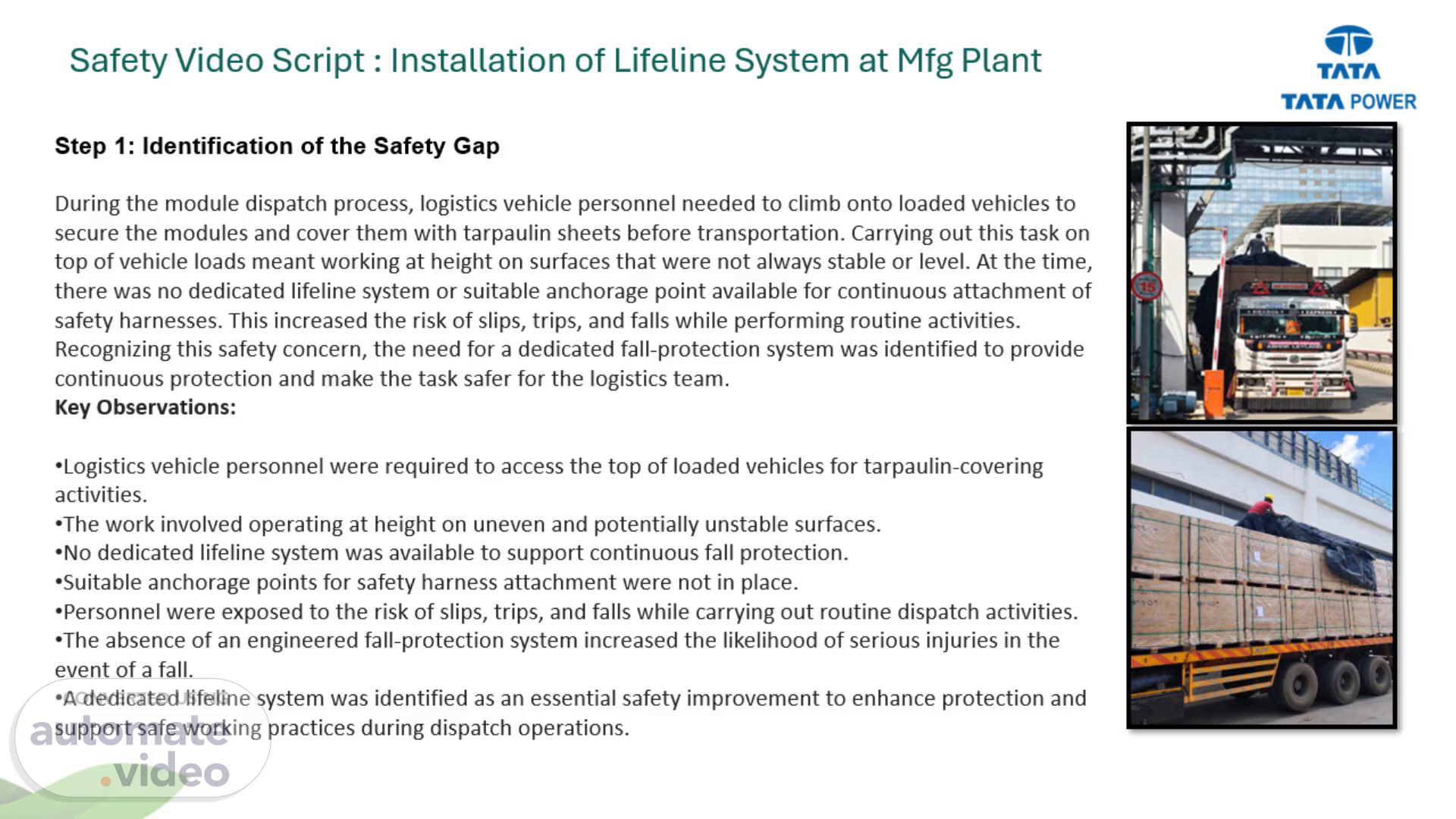
[Audio] As part of the module dispatch process, logistics vehicle personnel had to climb onto loaded vehicles to secure the modules and cover them with tarpaulin sheets before transportation. Although this was a routine task, it required people to work at height on surfaces that were often uneven and not always stable. This created a risk of slips, trips, and falls while carrying out the activity. Another challenge was that there was no dedicated lifeline system or suitable anchorage point available for workers to remain continuously connected with their safety harnesses. Because of this, the level of fall protection was limited during the task. After reviewing the activity, this was identified as an important safety gap. To address the risk and provide better protection for the logistics team, a dedicated lifeline system was proposed. This would help ensure continuous fall protection and allow tarpaulin covering activities to be performed more safely and confidently..
Scene 2 (1m 2s)
[Audio] "After identifying the safety gap, the activity was reviewed to understand the risks involved when logistics personnel worked at height on loaded vehicles. The assessment confirmed that there was a need for a more reliable fall protection system to prevent serious injuries from potential falls. To address these risks, a dedicated horizontal lifeline system was installed in the loading area. Personnel were required to remain connected to the lifeline while working at height, and the use of full body safety harnesses was made mandatory for all tarpaulin covering activities. In addition, awareness sessions and practical training were provided to ensure safe work at height practices and proper use of fall protection equipment. Clear safety requirements and supervision were established during loading and dispatch activities, and regular inspections of the lifeline system and related equipment were introduced to ensure continued reliability. These improvements have strengthened safety during dispatch operations by providing continuous fall protection and significantly reducing the risk of falls.".
Scene 3 (2m 11s)
[Audio] To improve safety during loading and dispatch activities, a dedicated lifeline system has been installed in both the loading area and the scrapyard. This system provides a secure anchorage point, allowing logistics personnel to connect their full body harnesses while working on top of vehicles during tarpaulin covering activities. With continuous fall protection in place, personnel can perform their tasks more safely and confidently. The lifeline system significantly reduces the risk of falls, supports compliance with work at height safety requirements, and ensures better control of the activity. This improvement has strengthened the overall safety of daily dispatch operations by providing a reliable fall protection solution. It demonstrates the organization's proactive approach to risk reduction and its commitment to protecting people, preventing incidents, and promoting a safer workplace culture..
Scene 4 (3m 11s)
[Audio] To ensure the lifeline system is used effectively, logistics personnel were provided with training on safe work at height practices, including the correct use of safety harnesses and the importance of staying connected to the lifeline system throughout the activity. Before work begins, the lifeline system and all fall protection equipment are inspected to confirm they are safe and fit for use. All tarpaulin covering activities are carried out in accordance with the approved Work at Height Procedure. In addition, the Security team conducts regular monitoring and supervision to ensure personnel follow the required safety controls and remain properly connected while working on top of vehicles. Through a combination of training, inspections, and ongoing monitoring, the effectiveness of the lifeline system is maintained, helping to create a safer working environment and significantly reducing the risk of falls during loading and dispatch operations..
Scene 5 (4m 10s)
[Audio] "Module loading is carried out using approved lifting equipment and established safe lifting practices to ensure the modules are handled safely and efficiently. Before loading begins, wheel chockers are placed on the vehicle wheels to prevent any unintended movement and keep the vehicle stable throughout the operation. Once the modules are loaded, they are carefully positioned and secured to prevent shifting during transportation. Only after the load has been confirmed as stable does the tarpaulin covering activity begin. Throughout the operation, personnel maintain a safe distance from suspended loads and follow all required safety procedures. The use of wheel chockers, together with proper load securing and safe lifting practices, helps create a safer and more controlled working environment for everyone involved in the dispatch process.".
Scene 6 (5m 5s)
[Audio] Before loading starts, wheel chockers are placed to keep the vehicle safely in position. The modules are then loaded using approved lifting equipment and safe lifting practices. Once loading is complete, the modules are properly secured and checked for stability before the tarpaulin covering activity begins. Throughout the process, everyone follows safe working practices and stays clear of suspended loads. These simple but important controls help ensure the dispatch activity is carried out safely, smoothly, and with reduced risk to personnel.".
Scene 7 (5m 51s)
[Audio] Once the modules are loaded and secured, the tarpaulin covering activity is carried out using the installed lifeline system and approved work at height safety practices. Before accessing the top of the vehicle, logistics personnel connect their full body harnesses to the horizontal lifeline to ensure continuous fall protection. During the activity, personnel remain attached to the lifeline while spreading and securing the tarpaulin. The work is performed carefully and in a controlled manner to maintain balance and prevent falls. Supervisors and security personnel monitor the activity to ensure that all required safety measures are being followed. If any unsafe condition is observed or if a person is found working without proper fall protection, the activity is stopped immediately and resumed only after the necessary safety controls are in place. These improvements have made the tarpaulin covering process significantly safer and have greatly reduced the risk of falls during dispatch operations..
Scene 8 (6m 52s)
[Audio] "Once the tarpaulin has been secured, a final inspection is carried out to ensure the modules are properly covered and the load is ready for safe transportation. Personnel then safely climb down using the designated ladder, disconnect from the lifeline system, and remove any tools or materials used during the activity. Good housekeeping is maintained to keep the area clean and free from obstructions. After confirming that all personnel are clear of the vehicle, the wheel chockers are removed and the vehicle is prepared for movement. Only after all safety checks have been successfully completed and the load is confirmed to be secure is the vehicle released for dispatch, ensuring the modules can be transported safely to their destination.".
Scene 9 (7m 40s)
[Audio] "The installation of the lifeline system has significantly improved the safety of module loading and tarpaulin covering activities by reducing the risk of falls while working at height. Combined with proper training, safe access arrangements, the use of appropriate P-P-E--, and regular supervision, it provides better protection for logistics personnel carrying out these tasks. This improvement demonstrates our commitment to identifying workplace risks, implementing practical safety solutions, and ensuring that every activity is performed safely and responsibly. Safety is everyone's responsibility. There can be no compromise when it comes to safety. Every person who comes to work deserves to return home safely at the end of the day.".