Scene 1 (0s)
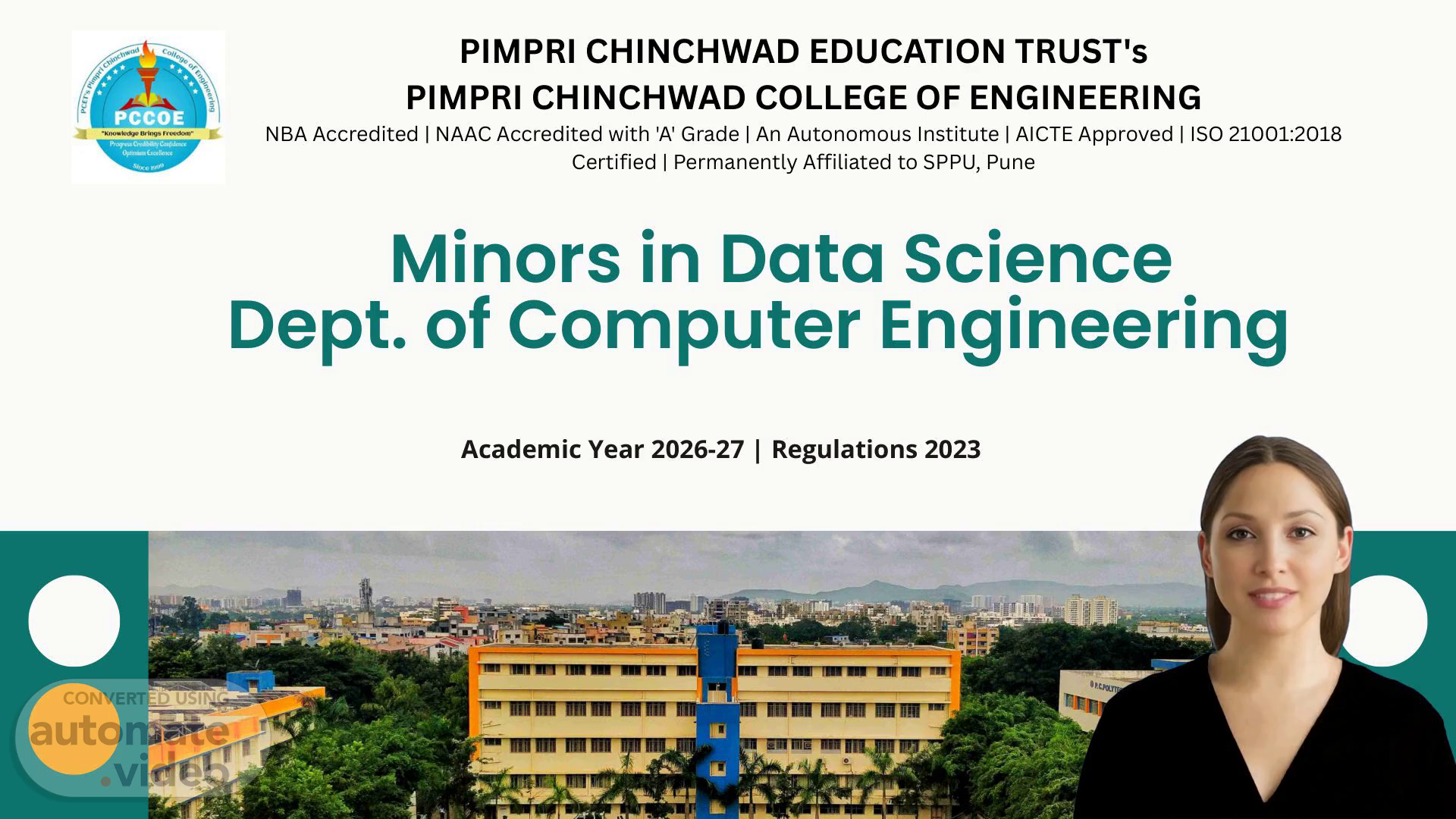
[Virtual Presenter] The institution is recognized as a premier educational institution in the state of Maharashtra, and it is known for its academic excellence and research opportunities. The institution is also recognized as a center for innovation and entrepreneurship, and it has established partnerships with several international organizations. The institution has received numerous awards and recognition from various government agencies and private companies. The institution has a strong focus on interdisciplinary learning, and it offers programs that cater to students who are interested in pursuing careers in fields such as artificial intelligence, machine learning, and cybersecurity. The institution has a well-equipped laboratory facility, which provides students with hands-on experience in conducting experiments and investigations. The institution has a diverse student body, comprising students from various backgrounds and cultures. The institution offers scholarships to deserving students, and it has a robust support system in place to ensure their success. The institution has made significant contributions to the field of education, and it has been instrumental in shaping the future of engineering and technology. Its commitment to innovation and excellence has earned it a reputation as a leader in the field of engineering education..
Scene 2 (1m 21s)
[Audio] The program is designed to provide students with a comprehensive education in engineering, spanning four semesters from Semester V to VIII. This will involve a total of seven courses, which will contribute to a total of 600 marks across all components of the program. These courses include coursework, laboratory work, and a minor project component. The program type is a minors degree, which complements the core engineering studies outlined in the Regulations 2023. The key highlights of this program are its multidisciplinary nature, its relevance to industry, and its strong research foundation..
Scene 3 (2m 1s)
[Audio] Key Objectives are the foundation upon which our academic programs are built. They encompass three main areas: imparting knowledge, equipping students with industry-ready skills, and addressing industry demands. In essence, these objectives focus on providing students with a comprehensive education that spans multiple disciplines, including data science, statistics, and engineering. This approach enables students to develop a broad range of skills that can be applied across various engineering fields. Furthermore, it ensures that our graduates meet the growing demand for multidisciplinary data-driven professionals in the industry. By building a strong foundation for advanced research and postgraduate opportunities, we aim to equip our students with the knowledge and expertise necessary to excel in their chosen careers..
Scene 4 (2m 54s)
[Audio] The Data Scientist role requires a strong foundation in statistics and mathematics, as well as programming skills in languages such as Python, R, or SQL. A good understanding of machine learning algorithms and techniques is also essential. Furthermore, effective communication skills are necessary to present findings and results to non-technical stakeholders. The ability to design and implement data pipelines, warehouses, and scalable infrastructure systems is also crucial. Additionally, knowledge of cloud computing platforms like AWS or Azure is highly desirable..
Scene 5 (3m 35s)
[Audio] The field of Data Science encompasses various disciplines including statistics, computer science, and mathematics. These disciplines are combined to analyze large datasets and extract meaningful information from them. Machine learning and deep learning techniques are used to identify patterns and make predictions. Data visualization plays a crucial role in presenting complex data in a clear and concise manner. The core skills required for Data Science include proficiency in programming languages such as Python and R, as well as knowledge of statistical modeling and data mining. Additionally, Data Science requires collaboration with experts from other fields to ensure that solutions are tailored to specific business needs..
Scene 6 (4m 24s)
[Audio] The courses offered by PCCOE for students pursuing Semesters V through VIII form a comprehensive foundation in data science. Students will have the opportunity to explore various disciplines such as probability and statistics, programming with python, and the basics of data science. In semester seven, they will delve into more advanced topics like data analytics and visualization. Finally, in semester eight, students will work on their minor project, applying data science principles to real-world scenarios. Throughout these semesters, students will accumulate a total of twenty credits, providing them with a solid understanding of data science..
Scene 7 (5m 9s)
[Audio] The course covers essential topics such as distributions, hypothesis testing, and statistical inference, providing students with a solid foundation in these areas. Students will also explore programming skills through the Programming with Python Laboratory. This hands-on experience will enable students to master Python coding, data structures, and scripting fundamentals. Furthermore, students will gain a deeper understanding of data science by taking the Basics of Data Science course. This comprehensive course includes data preprocessing, introduction to machine learning, and exploratory analysis, all of which are crucial components of data science..
Scene 8 (5m 53s)
[Audio] Learning outcomes for semester VII and VIII highlight key skills acquired by students during these semesters. Students will develop expertise in data analytics and visualization techniques, including clustering, association rules, regression, and other data analytics techniques. They will also gain hands-on experience in visualizing data using tools such as Tableau, Excel, and Python libraries. Furthermore, they will work on a real-world data science project, applying all learned concepts to solve practical problems. This comprehensive curriculum provides students with a solid foundation in data science and prepares them for more advanced studies or careers in the field..
Scene 9 (6m 39s)
[Audio] The instructor has provided a detailed outline of the course content, including specific learning objectives and assessment criteria. The instructor emphasizes the importance of mastering statistical methods and tools to analyze data effectively. The instructor highlights the significance of exploring data through various techniques and tools, including machine learning algorithms and visualization software. The instructor notes that the course aims to equip students with practical skills and knowledge to tackle real-world data analysis challenges. The instructor stresses the value of developing critical thinking and problem-solving abilities through hands-on experience with statistical tools and methodologies. The instructor explains that the course covers a range of topics, including exploratory data analysis, machine learning, and data visualization, all of which are essential for effective data analysis. The instructor emphasizes the need for students to demonstrate mastery of these skills and knowledge areas to achieve success in the course. The instructor provides examples of how students can apply data science concepts to solve real-world problems. The instructor encourages students to explore different tools and technologies to find what works best for them. The instructor offers guidance on how to approach data analysis tasks and how to evaluate the effectiveness of different approaches. The instructor suggests that students work collaboratively with peers to develop and refine their skills. The instructor recommends that students keep track of their progress and reflect on their own learning throughout the course. The instructor advises students to seek additional resources if they encounter difficulties or need further clarification on certain topics. The instructor provides a clear plan for assessing student performance and evaluating the overall effectiveness of the course. The instructor outlines the key learning outcomes and assessment criteria for each topic covered in the course. The instructor ensures that students understand the importance of meeting the learning objectives and achieving the desired level of proficiency. The instructor offers support and resources to help students overcome any obstacles or challenges they may face during the course. The instructor provides opportunities for students to engage in discussions and share their experiences with peers. The instructor facilitates a collaborative environment where students can learn from one another and build on each other's strengths. The instructor helps students to identify areas where they need improvement and develop strategies for addressing those gaps. The instructor encourages students to take ownership of their learning and to strive for excellence in their academic pursuits. The instructor promotes a culture of continuous learning and professional development. The instructor supports students in their pursuit of certification or licensure in data science. The instructor provides access to external resources and partnerships that can enhance students' learning experience. The instructor offers flexible scheduling options to accommodate students' busy schedules. The instructor provides feedback on students' assignments and projects, helping them to improve their skills and knowledge. The instructor offers guidance on how to navigate the job market and secure employment in the field of data science. The instructor provides resources and support for students who wish to pursue further education or certifications in related fields. The instructor helps students to develop a portfolio of work that showcases their skills and accomplishments. The instructor encourages students to stay up-to-date with industry trends and developments. The instructor promotes a culture of innovation and creativity in the classroom. The instructor supports students in their efforts to apply data science concepts to real-world problems. The instructor provides opportunities for students to engage in case studies and simulations. The instructor offers resources and support for students who wish to participate in hackathons or competitions. The instructor provides guidance on how to communicate complex data insights.
Scene 10 (11m 1s)
[Audio] Students will gain hands-on experience with industry-standard tools such as Python, R, and Weka for data processing, NumPy, Pandas, and Scikit-learn for machine learning, and Tableau and Excel for data visualization and reporting. These tools are widely used in the field of data science and will enable students to work efficiently and effectively with large datasets..
Scene 11 (11m 27s)
[Audio] The PCCOE's mission is to provide students with a comprehensive education that prepares them for a successful career in the field of computer science and technology. The institution aims to foster a culture of innovation, creativity, and critical thinking among its students. The department focuses on developing skills such as problem-solving, communication, and teamwork, which are essential for success in the industry. The faculty members at PCCOE are dedicated professionals who have expertise in their respective fields. They strive to create a learning environment that encourages active participation, collaboration, and feedback. The curriculum is designed to equip students with the necessary knowledge and skills to excel in the field of computer science and technology..
Scene 12 (12m 20s)
[Audio] Enrollment for the academic year 2026-27 is now available. Students can enroll in various programs offered by the college under the regulations of 2023. Our Department of Computer Engineering is located at sector no. 26, pradhikaran, nigdi, pune 411044. To learn more about the programs and admission process, please contact the department. Students can consider pursuing a minor in data science to shape their future. Enrolling in the college provides many benefits and opportunities for growth. Interested students are encouraged to take advantage of these opportunities and secure a place in the field of computer engineering..
Scene 13 (13m 7s)
[Audio] I have been working on a project that involves the development of a new type of aircraft, which I believe will revolutionize the aviation industry. The aircraft is designed to be more fuel-efficient and environmentally friendly than existing models. Its unique features include advanced aerodynamics, lightweight materials, and cutting-edge technology. The aircraft's design allows it to fly at higher altitudes and cover greater distances without consuming excessive amounts of fuel. This innovative approach has garnered significant attention from various stakeholders, including airlines, governments, and environmental organizations. Many experts predict that this new aircraft will significantly reduce greenhouse gas emissions and help mitigate climate change. However, some critics argue that the aircraft's high-tech features may make it too expensive for widespread adoption..