Future-Trends-in-Computer-Architecture (1)


Scene 1 (0s)
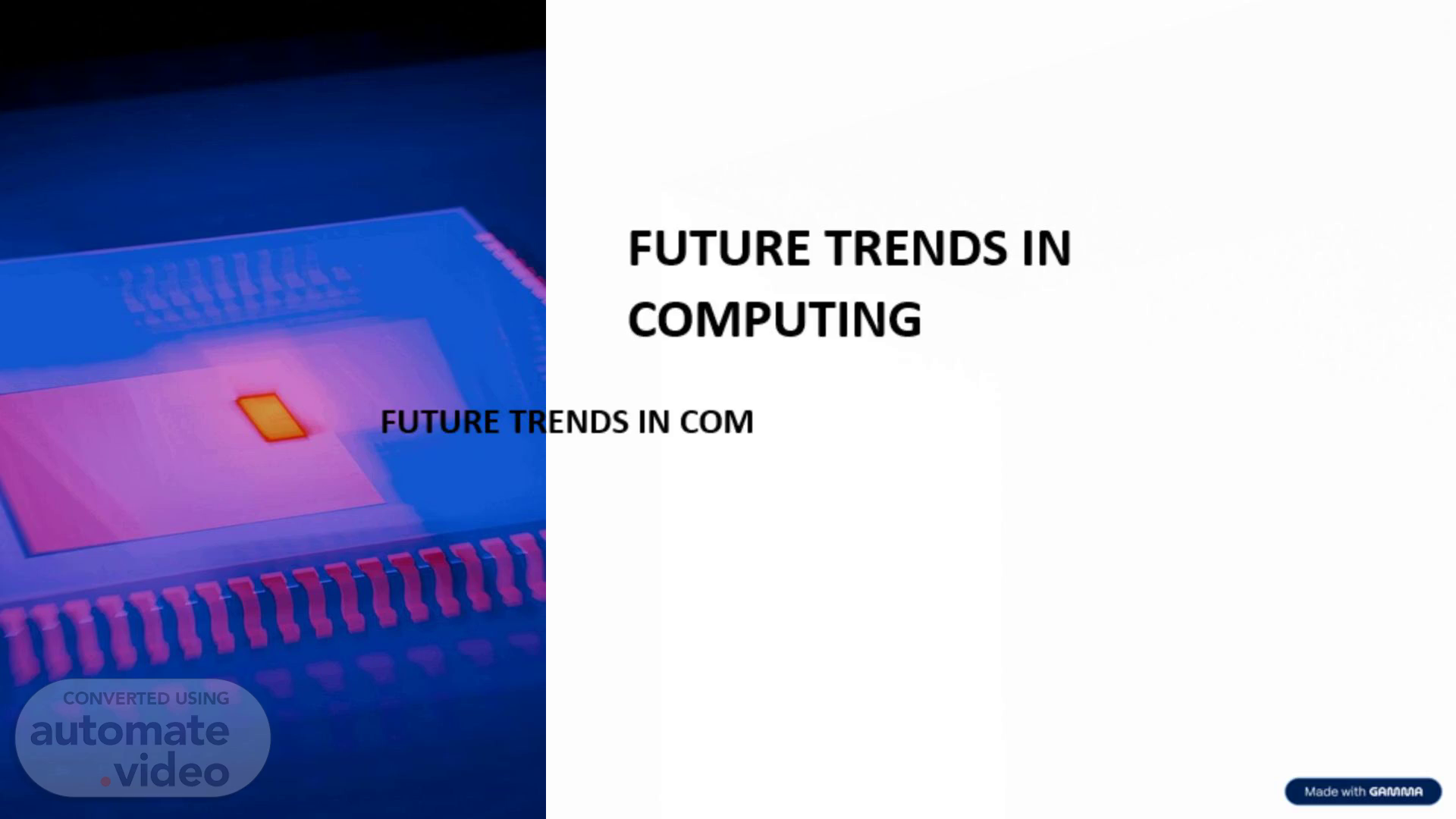
FUTURE TRENDS IN COMPUTING. FUTURE TRENDS IN COMPUTING.
Scene 2 (8s)
Introduction. Computer architecture is the design of computer systems — the foundation that determines how all components work together. It includes processors, memory, storage, and networking. Modern computers are becoming faster and smarter, and new technologies are changing the future of computing..
Scene 3 (31s)
Artificial Intelligence (AI) Hardware. Special processors are made for AI tasks. AI chips can process large amounts of data quickly, enabling machines to learn, reason, and make decisions in real time..
Scene 4 (52s)
Quantum Computing. What Makes It Different?. Quantum computers use qubits instead of normal bits. Unlike classical bits that are either 0 or 1, qubits can exist in multiple states simultaneously — enabling them to solve difficult problems very fast..
Scene 5 (1m 13s)
Parallel Processing. Many processors work together at the same time. This approach improves computer speed and performance, and helps handle large and complex tasks efficiently..
Scene 6 (1m 32s)
Energy-Efficient Computing. Future computers will consume less electricity. Green computing reduces heat and pollution, gives longer battery life, and helps protect the environment..
Scene 7 (1m 51s)
Cloud and Edge Computing. ☁ Cloud Computing. Data is stored on internet servers. Users can access files from anywhere — enabling seamless collaboration and global accessibility..
Scene 8 (2m 11s)
Neuromorphic and 3D Chip Technology. Neuromorphic Computing.
Scene 9 (2m 32s)
Security and IoT Support. 00 00 to. Security-Focused Architecture.
Scene 10 (2m 50s)
Conclusion. Computer architecture is improving rapidly. Future computers will be faster, smarter, and more efficient. AI, quantum computing, and cloud technologies will shape the future — and these technologies will improve daily life and industries across the world..